The short answer
Active ageing does not mean looking or functioning as in youth. A more useful aim is functional ability: moving around, making decisions, maintaining relationships and managing ordinary life with available support.
Functional ability is broader than fitness
WHO describes the ability to do things a person values. It includes mobility, decisions, relationships and participation.
Movement is one practical support
Appropriate regular movement can be part of a day. Tai Chi is one option for calm coordinated movement, not a replacement for a whole health plan.
Environment matters too
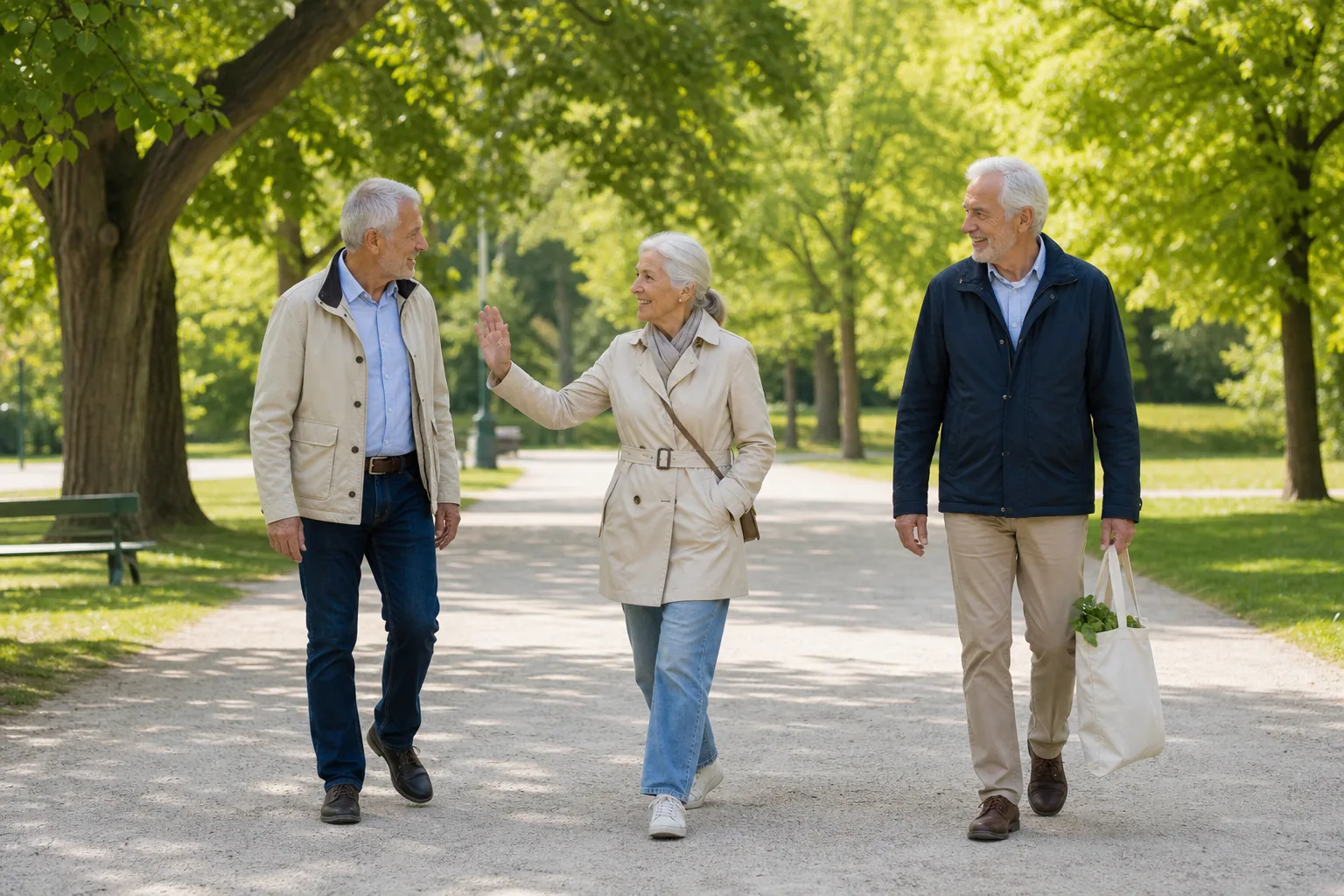
A safe path, transport, aids and people nearby can change what is possible in daily life.
Connection and participation belong
Keeping contact and having a reason to go somewhere are practical parts of living well, not an extra.
The goal is not a promise
No habit guarantees independence. New difficulties, pain or falls deserve appropriate professional advice.
Common questions
Is active ageing only exercise?
No. It also includes environment, relationships, choice and support.
Must movement be intense?
No. Type and range should suit the person and situation.
Can Tai Chi replace treatment?
No. It is a movement practice, not treatment or diagnosis.
Sources
- WHO — Healthy ageing and functional ability
WHO frames healthy ageing as developing and maintaining functional ability, not the absence of every disease.
- National Institute on Aging — Health Benefits of Exercise and Physical Activity
This overview supports appropriate activity; it does not predict independence for an individual.