
The short answer
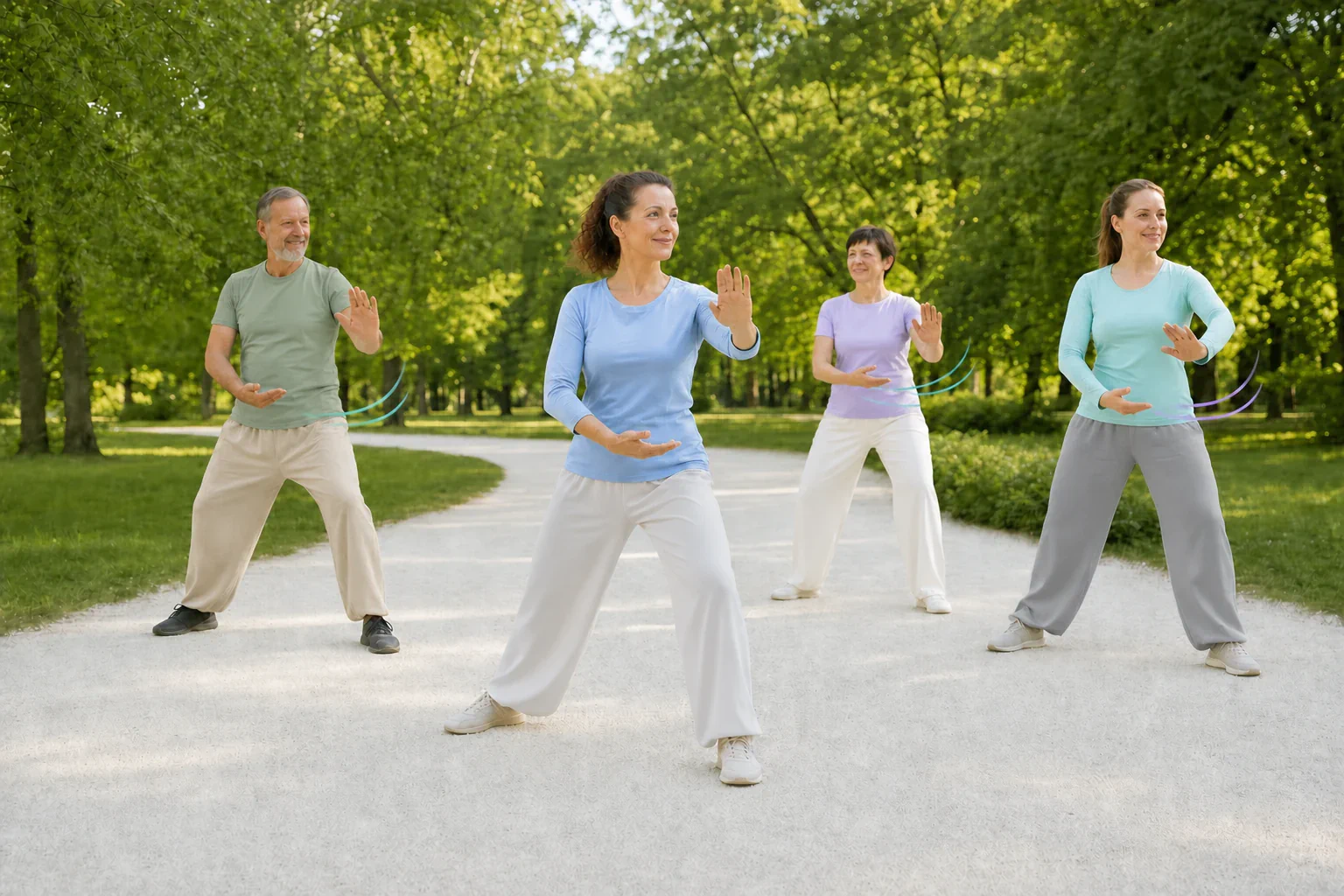
Tai Chi is a calm movement practice that develops weight shifting, coordination and focused attention through slow, connected movements. You do not need previous experience, exceptional flexibility or a high level of fitness. Curiosity, comfortable clothing and a willingness to learn gradually within your own range are enough for a first practice.
What Tai Chi is
Tai Chi, also written as taiji or taijiquan, developed in China as a martial art. Today, many people practise it primarily as a refined form of movement that brings together balance, coordination and attention. UNESCO describes taijiquan as a traditional physical practice characterized by relaxed, circular movements, breath regulation and a focused mind.
Tai Chi Bratislava does not teach contact or combat training. Movements are introduced in clear stages, without pressure to perform. You do not have to learn Chinese terminology or memorize a complete form immediately. First you explore how to stand comfortably, transfer your weight and coordinate the arms with the body.
What happens in your first practice
A first meeting has a calm rhythm. The teacher demonstrates a movement, divides it into manageable parts and leaves time to repeat it. You are not expected to copy every detail at once. A beginner first learns direction, rhythm and the feeling of stable support; subtler connections come later.
- A quiet arrival: Notice your posture, the contact of your feet with the ground and natural breathing
- Gentle preparation: Move the shoulders, hips, knees and ankles without forceful stretching
- Weight shifting: Distinguish the supporting leg from the lighter leg and change support without rushing
- A basic movement: Repeat one or two clearly explained movements several times
- A short connection: Finish by joining a few steps into a simple flowing passage
What to wear and bring
Choose loose or flexible clothing that lets you lift your arms, soften your knees and step sideways comfortably. Light, stable footwear with a reasonably thin sole is useful. For outdoor morning practice, wear layers and bring water.
You do not need a uniform, mat or specialist equipment. Most people also feel more comfortable after a light meal than after eating a large meal immediately before moving.
Three principles that make starting easier
- A comfortable range: The aim is not to sink as low as possible. A higher stance and shorter step can keep movement stable and free from sharp pain
- Natural breathing: A beginner does not need to match every inhalation to a gesture. Avoid holding or forcing the breath
- Quality before quantity: A few attentive weight shifts are more useful than rushing through a long form
How to practise between group meetings
Five to ten minutes is enough at first. Stand near a firm support, release unnecessary tension in the shoulders and slowly transfer weight from one leg to the other without lifting the feet. Then repeat one movement you remember confidently. You do not have to complete an entire form for a short practice to be worthwhile.
Choose one simple task instead of chasing many details. On one day, notice the feet; on another, follow natural breathing or the smooth direction of the hands. If you cannot remember what comes next, do not invent the sequence. Return to a basic stance and wait for the next clear explanation in the group.
- Without rushing: Move slowly, but not so slowly that you become rigid or lose stability
- Without pain: Reduce the range if pressure feels uncomfortable and stop if you feel sharp pain
- With one note: Write down one question you would like to clarify at the next group meeting
Seven common beginner mistakes and calm ways to correct them
A learning mistake is not a reason for embarrassment or evidence that you lack talent for Tai Chi. It is information about what to simplify in the next repetition. A beginner usually benefits from one clear correction and an immediate chance to try again, not pressure to be perfect.
- Sinking into an excessively low stance: Do not force the knees to look advanced. Raise the stance, shorten the step and check that the knees remain in a comfortable direction
- Copying the hands without transferring weight: First notice which leg supports you and where your weight is moving. Add the arms afterwards with a smaller range
- Holding or forcing the breath: Do not chase an exact breathing pattern at first. Choose an easier range and pace that let breathing remain natural
- Rushing and collecting too many movements: Instead of adding another movement, repeat a short passage you understand. Clarity in one connection is more useful than hurrying through a form
- Practising through sharp pain or dizziness: Stop, establish stable support and do not continue through a warning symptom. Seek qualified healthcare advice for symptoms that are new, severe or persistent
- Comparison and pressure for perfection: Observe your own stability and one specific change. Differences in range or learning pace are not a contest or a judgement of ability
- Guessing an unclear sequence: If you lose the order, do not improvise or race to catch up. Return to a stable basic stance, watch the next demonstration or ask one concrete question
How to start safely
Tai Chi is generally regarded as a low-risk practice, but gentle does not automatically mean appropriate for every person in every situation. If you have a recent injury, substantial balance impairment, unexplained dizziness, serious heart symptoms or recent surgery, ask a qualified healthcare professional whether this type of movement is suitable for you.
Tell the teacher about any condition that may affect standing or walking. Stop if a movement causes sharp pain, dizziness or a feeling that you may fall. Adapting a stance is not failure; it is a normal part of learning intelligently.
Frequently asked questions
Am I too stiff or unfit for Tai Chi?
No. Movements can be made smaller and stances higher. The range is adapted to the person, not the other way around. Comfortable, controlled movement matters more than comparison.
Do I have to know how to meditate?
No. Attention is trained practically by noticing your feet, direction and transfer of weight. Thoughts do not have to disappear; you simply return calmly to the movement.
What should I do if I feel sharp knee pain in a stance?
Stop and do not try to overcome the pain by sinking lower. A higher stance and shorter step may be appropriate for a later attempt, but new, severe or persistent pain should be discussed with a qualified healthcare professional.
Should I watch the hands or the weight transfer in a new movement?
Clarify the support beneath your feet and the direction of the weight transfer first. When the stance remains stable, add a simpler arm movement. You do not need to copy every detail at once.
What if I lose the sequence during practice?
Do not rush after the group or invent what comes next. Return to a stable basic stance, watch the next clear demonstration and ask about one specific step when there is an opportunity.
Sources
- UNESCO — Taijiquan
Authoritative description of the tradition, its movement characteristics and its intangible heritage inscription
- National Center for Complementary and Integrative Health — Tai Chi: What You Need To Know
National Institutes of Health overview of research, safety and practical considerations