The short answer
Exercise after 40 does not require a secret age-specific regime. After a break, establish your current level, begin with short light-to-moderate activity and gradually increase only duration, frequency or difficulty at one time. Aerobic and strength activity belong in the long-term plan; mobility and coordination can complement them. Age 40 is a useful search label, not a medical threshold or an automatic reason to hold back.
Forty is not a biological switch
The body does not suddenly change mode on a birthday. For a safe return, it matters more whether you have moved regularly in recent months, what loads you know, whether you have symptoms or a diagnosed condition and what intensity you intend to try. The same calendar age can represent entirely different starting points.
Use exercise after 40 as a practical topic for people rebuilding a habit, not as a universal diagnosis. The aim is not to recover past performance in a few sessions but to create a rhythm that fits work, family, sleep and recovery.
Take a brief inventory before the first week
Write down the movement already present in your ordinary day: walking, stairs, cycling, physical work or household tasks. Then notice what is missing. One person needs a regular aerobic rhythm; another needs strength or simply a time slot that does not keep disappearing.
Choose one familiar activity you can do in a comfortable range. The first block is there to observe your response, not prove your fitness. Notice whether the pace was appropriate and whether you could repeat it without prolonged accumulated fatigue.
- Current level: How much movement your ordinary week already contains
- Access: Which activity remains repeatable on a working or rainy day
- Response: How you feel during activity, that evening and the following morning
Start smaller and increase one thing at a time
Official guidance for inactive adults supports beginning with short periods of light- or moderate-intensity activity and working gradually towards the full weekly destination. A smaller gap between usual and new activity gives the body room to adapt and makes an excessive change easier to identify.
You might first extend a comfortable walk, add another day later and only then try a higher pace. If duration, number of days and intensity all rise together, it becomes difficult to know which change produced fatigue or poorer technique.
Moderate intensity is relative to your fitness. A practical guide is the ability to speak in short sentences even though your breathing is noticeably faster. You do not need to copy the pace of somebody with a different movement history.
Gradually combine aerobic and strength activity
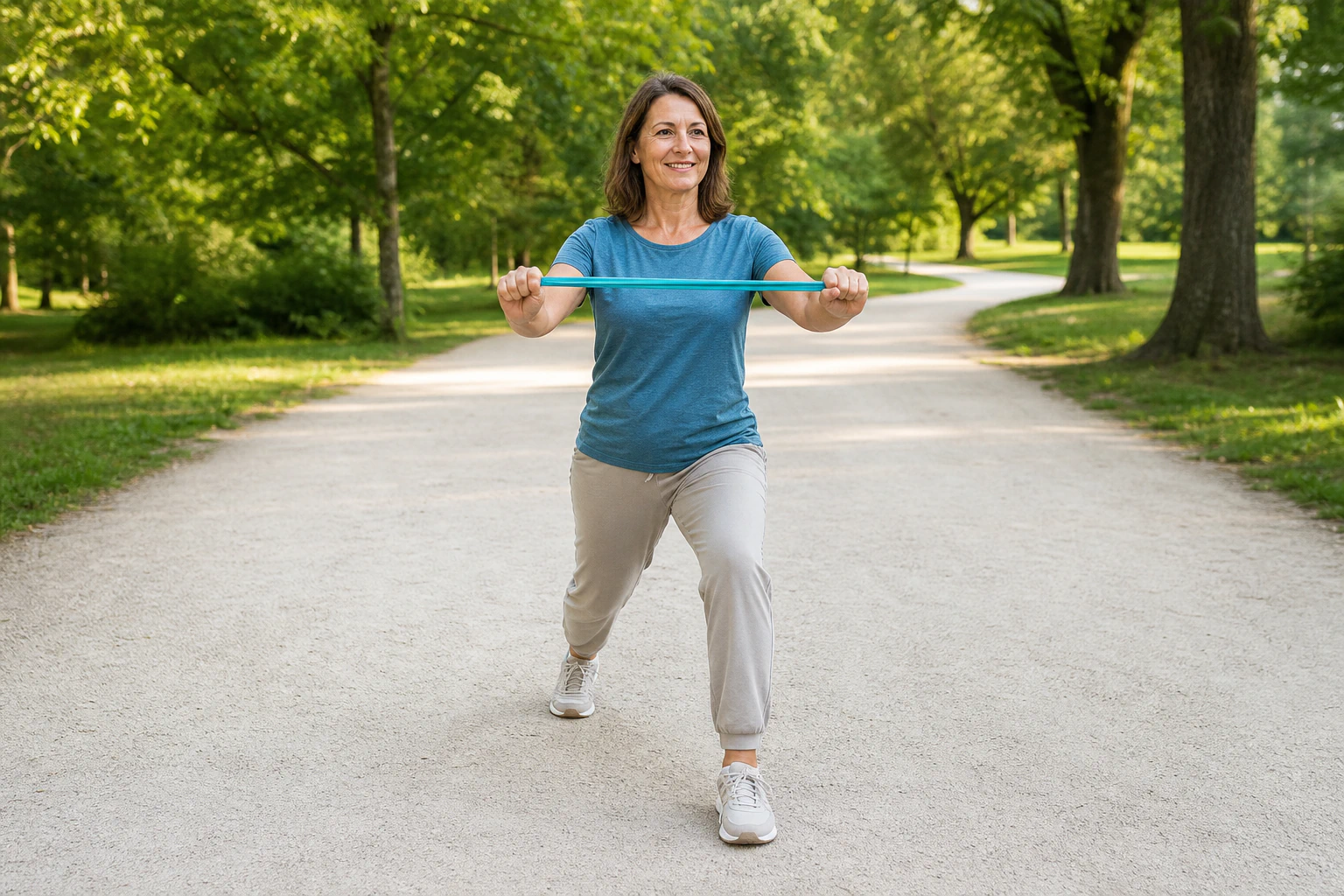
WHO and other official guidance emphasise that a long-term adult plan includes both aerobic activity and strengthening the major muscle groups. Walking, cycling or swimming can provide an aerobic foundation; body weight, elastic bands, free weights or machines can provide appropriate resistance.
Mobility and coordination can complement what you need for particular movements. They should not automatically displace the aerobic or strength components. Tai Chi can be a calm coordination practice, but it is not a reason to omit other forms of activity.
A realistic first week need not meet the complete long-term target. What matters more is that the smaller plan can be repeated safely and developed according to your response.
Measure progress by sustainability and respect warning signs
Rather than judging only calories or speed, monitor consistency, your body's response and usefulness in real life. A missed day does not require a double repayment. Continue with the next planned block or make it smaller; a habit grows through repeatability, not punishment for a break.
The ACSM screening model does not base the need for health advice on age alone. It considers current activity, known disease, signs or symptoms and intended intensity. With a chronic condition, substantial movement limitation or plans for vigorous activity after prolonged inactivity, individual advice is sensible.
Stop and seek appropriate help for chest pain or pressure, fainting, unexplained dizziness, pronounced breathlessness with light effort or another new concerning symptom.
Calm practice while rebuilding consistency
How Tai Chi may fit the plan
Tai Chi offers slow coordinated movement, weight transfer and focused attention without a contest for speed. When returning after a break, it can be one activity that helps recreate a regular time for movement.
Tai Chi does not replace every component of physical activity or healthcare. If the Bratislava group interests you, the home page lets you send a no-obligation message. The complete beginner guide explains a first session without requiring a previous fitness background.
Frequently asked questions
Do I automatically need a different workout after 40?
No. Your current activity, health, experience, goals and intended intensity matter more. After a break, it is sensible to begin smaller and progress according to your response.
Should I begin with aerobic activity or strength?
A long-term plan includes both. You can start with the most accessible aerobic activity and gradually add simple strengthening for the major muscle groups.
Is muscle soreness normal when returning?
Mild temporary tenderness after unfamiliar activity can occur. Sharp, worsening or persistent pain, swelling or a new concerning symptom is not a signal to overpower.
Can Tai Chi be my only exercise?
Tai Chi can support coordination, balance and consistency, but it usually does not replace a complete aerobic and strength plan.
Sources
- World Health Organization — Physical activity
Official adult framework for aerobic and muscle-strengthening activity and the principle that every amount of movement counts
- U.S. Office of Disease Prevention and Health Promotion — Current Guidelines
Official entry point to evidence-based guidance for building physical activity gradually
- Centers for Disease Control and Prevention — Adding Physical Activity as an Adult
Guidance on choosing accessible activity and combining aerobic and strength movement
- Medicine & Science in Sports & Exercise — Updating ACSM's Recommendations for Exercise Preparticipation Health Screening
Screening model based on current activity, symptoms, known disease and intended intensity rather than age alone
- National Center for Complementary and Integrative Health — Tai Chi: What You Need To Know
Official overview of Tai Chi safety and evidence limitations