
The short answer
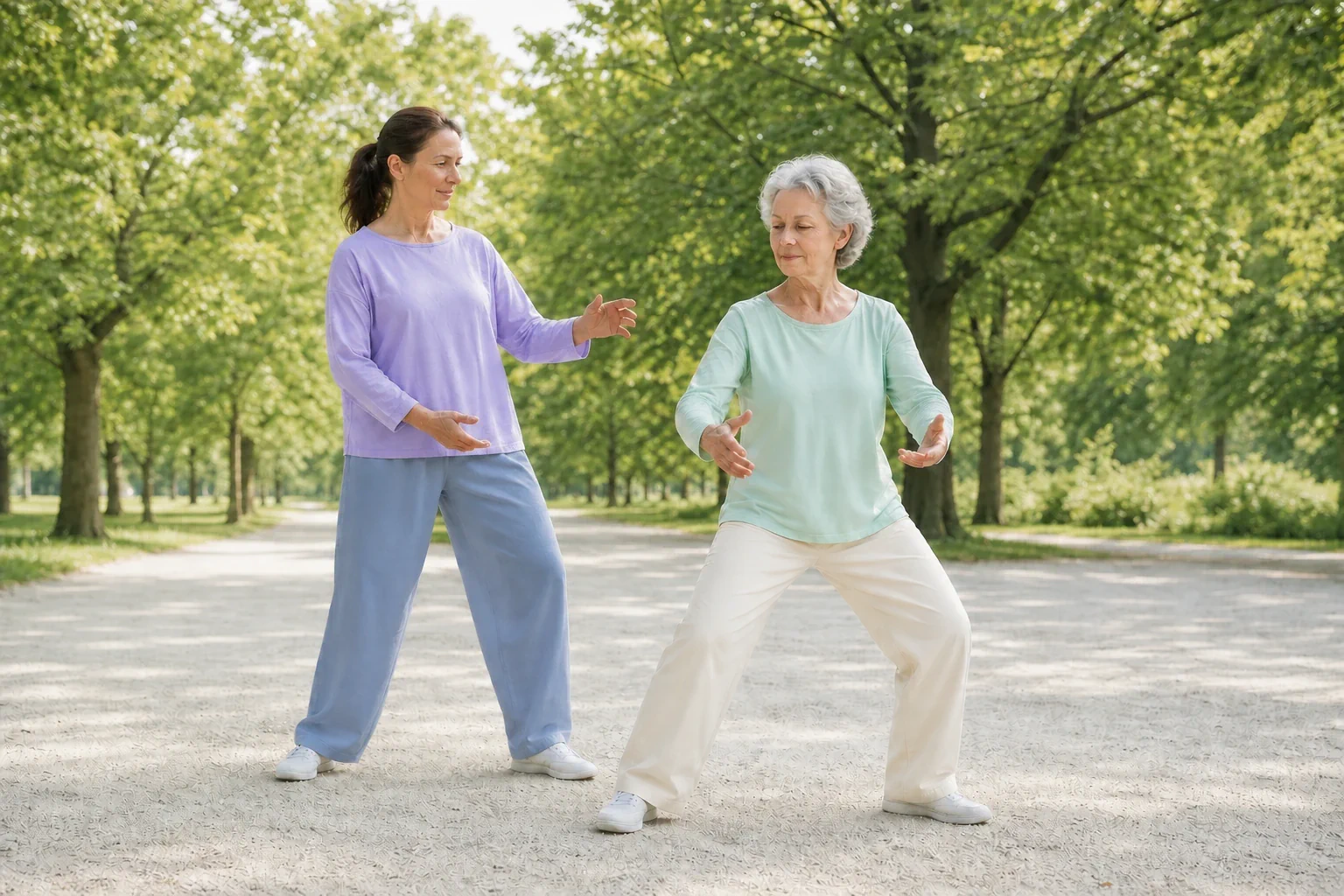
Tai Chi may support balance by repeatedly training slow weight transfers, controlled steps, changes of direction and coordination between vision and body movement. Research is encouraging, particularly in some groups of older adults, but results depend on the program, regular attendance and each person’s health and mobility.
Balance is more than standing on one leg
Whenever we stand or walk, the nervous system combines information from vision, the inner ear and receptors in muscles and joints. The body uses it to adjust muscle activity, trunk position and the next step. Good balance is therefore not perfect stillness, but the ability to notice a disturbance, adapt and continue safely.
Leg strength, ankle and hip mobility, attention, fatigue, eyesight, medication and the environment can all affect stability. One type of exercise cannot address every cause of unsteadiness. Tai Chi is best understood as one possible part of broader movement and health care, not as a universal treatment.
What Tai Chi trains
The slow pace creates time to feel whether a step is ready and whether the body remains above a safe base of support. The goal is not stiffness. It is adaptable stability: the ability to move without adding unnecessary tension.
- Weight transfer: Weight moves before the foot steps, allowing the lighter leg to change direction with greater control
- Trunk position: You can notice leaning, knee direction and foot stability without speed
- Steps and turns: Forward, backward and sideways steps train starting, stopping and changing direction
- Attention: Awareness of the feet, space and breath can reveal habits such as rushing into a step
What the research shows
A 2019 Cochrane systematic review included 108 randomized studies of exercise programs for independently living adults aged 60 and over. Programs emphasizing balance and functional movement reduced falls. For Tai Chi specifically, the analysis suggested a possible reduction in the rate of falls, but the certainty of evidence for that result was low, so it should be interpreted cautiously.
A randomized trial in JAMA Internal Medicine enrolled 670 adults aged 70 or older who had fallen in the previous year or had impaired mobility. In this precisely defined group, a therapeutically adapted Tai Ji Quan program delivered twice weekly for 24 weeks reduced falls more than stretching and more than a multimodal exercise program.
This was not an ordinary open class and does not prove that every Tai Chi form will produce the same result. Programs, duration and study quality vary. The most accurate conclusion is modest: regular, appropriately taught Tai Chi may be a useful part of balance training, but it does not replace an individual fall-risk assessment.
What to notice during practice
Balance cannot be judged only by how long you can stand on one leg. It is often more useful to notice the quality of ordinary transitions. Observe whether you rush into a step, whether the foot lands quietly and whether you can change direction without a sudden lean of the trunk.
These observations are not a diagnosis or a home fall-risk test. They are simple feedback during safe movement. If stability changes markedly from day to day, note circumstances such as fatigue or dizziness and discuss persistent difficulties with a qualified professional.
- Support: Do you feel space under the supporting foot or drift toward its edge
- Transition: Can you slow or pause the transfer without holding your breath
- Fatigue: Does movement remain equally clear near the end of a short practice
How to practise safely
If you feel unsteady, practise beside a wall, rail or solid chair. Begin with a higher stance and small weight shifts. Do not close your eyes or stand on one leg merely to make the exercise harder. Difficulty should increase only while movement remains controlled.
Seek professional assessment for repeated falls, sudden unsteadiness, dizziness, fainting, new weakness or a worsening gait. These signs may have causes that require investigation and more specific care.
Frequently asked questions
Will Tai Chi help everyone with balance problems?
Not necessarily. Many health factors can affect balance. Tai Chi may fit into a movement plan, but people with substantial difficulties should confirm its suitability with a qualified professional.
How often should I practise?
Research programs differ and many run for several months. This is not a prescription for everyone. Appropriate difficulty, good instruction and a level of consistency you can sustain matter most.
Sources
- Cochrane — Exercise for preventing falls in older people living in the community
Systematic review of randomized trials of exercise, balance and fall prevention
- JAMA Internal Medicine — Effectiveness of a Therapeutic Tai Ji Quan Intervention vs a Multimodal Exercise Intervention to Prevent Falls Among Older Adults at High Risk of Falling
Randomized clinical trial of 670 adults aged 70 and over at increased risk of falling
- National Center for Complementary and Integrative Health — Tai Chi: What You Need To Know
Balanced summary of available evidence and its limitations