
The short answer
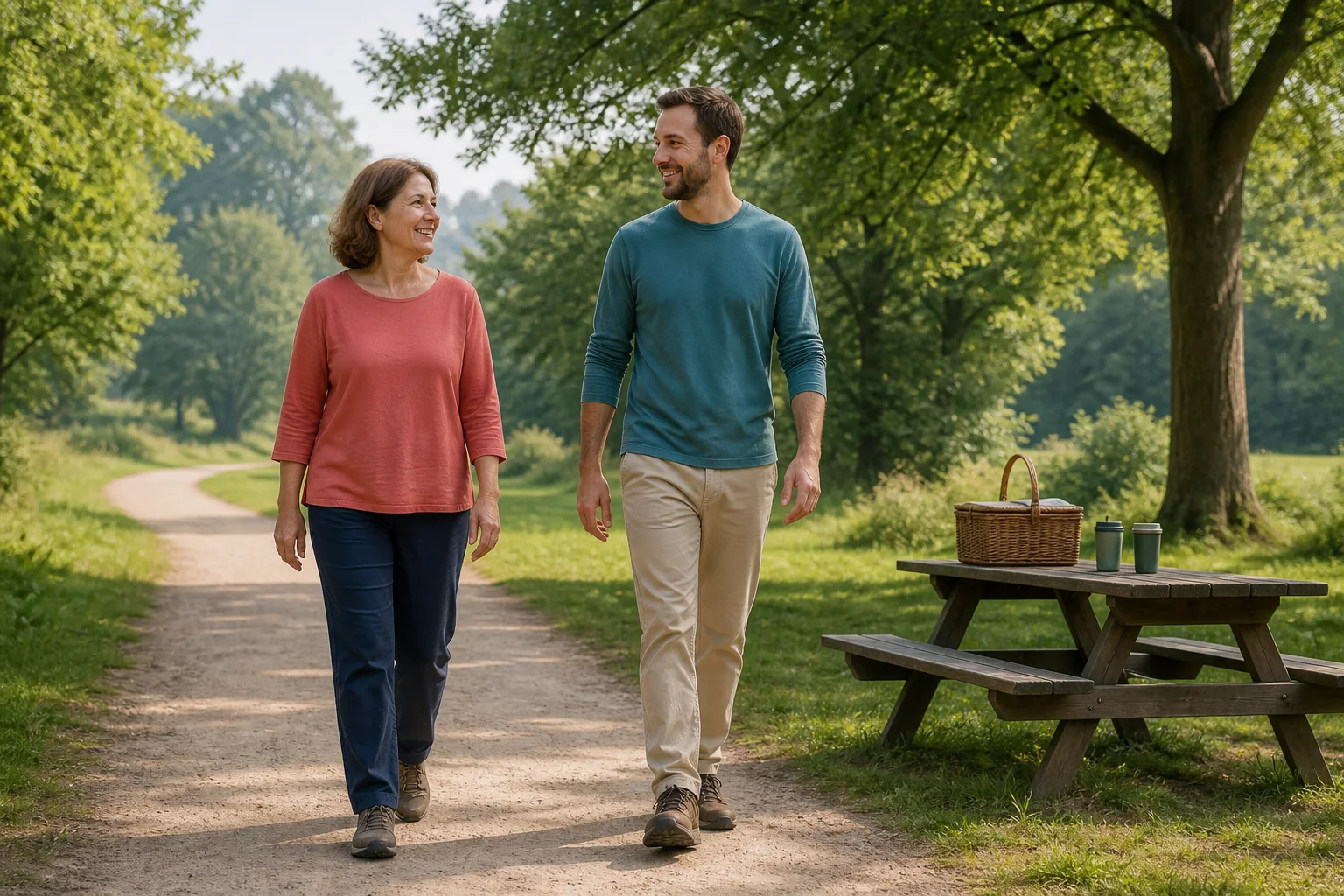
A short, calm walk after a meal can be a practical way to replace some sitting with movement. Small randomised crossover studies and a systematic review mainly show smaller short-term post-meal glucose rises compared with sitting or activity before eating. This does not prove that walking treats diabetes, guarantees weight loss or improves digestion, and the research does not establish one compulsory time or duration for everyone. Begin when you feel comfortable after eating, on a safe route and at a pace that lets you talk.
Research mainly measured the short response to a specific meal
Studies of post-meal walking commonly track glucose in blood or interstitial fluid for a few hours, or a daily profile during a short intervention. In a crossover design, the same participant tries several conditions in a varied order — for example sitting, one longer walk and shorter walks after meals. This helps compare an acute response, but it does not automatically answer a long-term health question.
The systematic review by Engeroff and colleagues included eight randomised crossover studies with 116 participants, some with type 2 diabetes and some without. On average, post-meal activity reduced the acute postprandial glucose response compared with inactivity and pre-meal activity. The authors rated the included trials at high risk of bias, however, and participant numbers were small. The result supports a cautious option, not a strong treatment promise.
There is no single magic minute after a meal
Individual experiments began activity immediately, around 10 to 30 minutes later or at another fixed time. The meta-analysis found a larger acute effect with earlier activity in the available small dataset, but different meals, populations, intensities and measurements prevent that average from becoming a precise personal alarm.
In practice, begin when you can stand and walk comfortably without struggling with fullness, nausea, reflux or pain. One person may leave after clearing the table; another may need a longer pause. If you feel unwell, delay or skip the walk. This article does not create an obligation after every meal.
- Evidence: Earlier activity had a more favourable acute average in a small study set, not a guaranteed personal result.
- Comfort: Adjust timing to fullness, reflux, weather, route and your own stability.
- Safety: Do not go out merely to meet a minute target when it is dark, icy or you feel dizzy.
Make the first attempt short, comfortable and easy to end
Choose a familiar level route without time pressure. Walk at a pace that lets you speak a full sentence and keep a natural stride. This is not a fitness test or an attempt to burn off food as fast as possible. Turn back before fatigue grows and leave yourself a simple way home.
Research protocols often used short bouts of roughly 10 to 20 minutes, but those numbers describe experiments, not a universal prescription. A shorter manageable circuit may suit the first habit. If you later add something, change one variable — extend the route slightly or add another day, rather than increasing time, speed and hills together.
- Route: A familiar level surface, suitable light and an easy way back.
- Pace: Comfortable walking with room to talk, without a compulsory brisk speed.
- Finish: Stop with reserve; repeatability matters more than fatigue.
Choose one meal for the routine, not as a moral judgement
You do not need to begin after breakfast, lunch and dinner. Choose a meal that is often followed by prolonged sitting and also gives you a safe time and route. For one person that is a lunch break; for another it is an earlier evening meal. The walk is not a punishment for how much or what you ate.
A simple cue can help: clear the table, put on shoes left ready and take the same short circuit. If a day does not work, there is no need to repay it with harder exercise. The separate regular-movement owner covers wider habit building; this page remains focused on meal timing.
A post-meal walk is not the whole active week
A short walk can add movement to a sedentary day, but it does not by itself cover all longer-term recommendations for aerobic activity, strength, mobility and, depending on age, functional balance. WHO stresses that every amount of movement counts and sedentary time should be limited, while the weekly framework is broader than one table-side habit.
Do not add the minutes in this article to other activities as a compulsory daily dose. Use the dedicated weekly owner when assembling the overall mix and consider ability, recovery and health status. Walking after a meal should be one sustainable part, not a measure of discipline.
An acute glucose curve does not prove treatment, weight loss or better digestion
The DiPietro study involved ten inactive people aged at least 60 who were at risk of impaired glucose tolerance. The Reynolds randomised crossover study followed 41 adults with type 2 diabetes over two short periods. Both offer interesting post-meal glucose findings, but their populations and protocols cannot be transferred to every healthy adult without further evidence.
These trials did not test whether an ordinary walk reliably removes bloating, speeds digestion, causes weight loss or prevents disease. A more favourable short-term glucose response is not a reason to change medicine, diet or a care plan. The research helps describe a possible timing effect of movement; clinical decisions need individual context.
Ask for individual advice with glucose-affecting medicines or new symptoms
If you have diabetes, use insulin or another medicine that affects glucose, experience repeated low-glucose episodes, have marked reflux, an eating disorder, pregnancy-specific advice or a walking limitation, agree with a healthcare professional how post-meal activity fits. Do not change medicine doses or food amounts from an online article.
Stop walking for chest pain, fainting, sudden weakness, new marked breathlessness, severe dizziness, acute abdominal pain or another serious or unusual symptom and seek appropriate help. With ordinary fullness and no warning sign, shorten the route, slow down or choose another time.
Another calm movement option
Tai Chi as another post-meal movement option
Tai Chi can be another regular coordinated movement option at a time when you feel comfortable after eating. This page does not use Tai Chi studies as evidence for post-meal walking, however, and Tai Chi is not glucose treatment or a replacement for an individual plan.
If you are interested in a calm group start in Bratislava, the beginner page explains higher stances, smaller ranges and live feedback. The separate Tai Chi and balance page owns the evidence for that topic; current organisational details are shared privately after a no-obligation WhatsApp message.
Common questions
How long after a meal should I start walking?
There is no compulsory minute. A small set of acute studies often tested activity within roughly the first 0 to 30 minutes, and the meta-analysis suggested a larger effect with earlier activity, but the trials had high risk of bias. Begin when you feel comfortable and have a safe route.
How many minutes should a post-meal walk last?
Research protocols often used roughly 10 to 20 minutes, but that is not a universal recipe. For a first habit, choose a shorter circuit you can finish with reserve and seek advice when health limitations are present.
Does the walk have to be brisk?
Not for a safer first attempt. Choose a comfortable pace that allows speech and controlled walking. Studies used varied intensities, so they do not establish one compulsory speed.
Can post-meal walking treat high glucose or diabetes?
Not on the basis of this article. Research mainly describes a short-term glucose response. Do not change medicine, food or a care plan; with diabetes or glucose-affecting medicine, discuss timing with a qualified professional.
Must I walk after every meal?
No. Start after one meal that gives you a safe space and a regular opportunity. Some trials tested several walks per day, but that does not create an obligation for everyone.
Sources
- World Health Organization — Physical activity
Current official framework for movement and limiting sedentary time; it does not prescribe a special therapeutic dose of post-meal walking
- Sports Medicine — After Dinner Rest a While, After Supper Walk a Mile? A Systematic Review with Meta-analysis on the Acute Postprandial Glycemic Response to Exercise Before and After Meal Ingestion
Systematic review of eight randomised crossover trials with 116 participants; assesses acute glucose response and rated the included studies at high risk of bias
- Diabetes Care — Three 15-min Bouts of Moderate Postmeal Walking Significantly Improves 24-h Glycemic Control in Older People at Risk for Impaired Glucose Tolerance
Small randomised crossover study of ten inactive older participants at risk of impaired glucose tolerance; its protocol is not a universal home dose
- Diabetologia — Advice to walk after meals is more effective for lowering postprandial glycaemia in type 2 diabetes mellitus than advice that does not specify timing: a randomised crossover study
Randomised crossover study of 41 adults with type 2 diabetes across two short periods; results do not replace individual advice or treatment