
The short answer
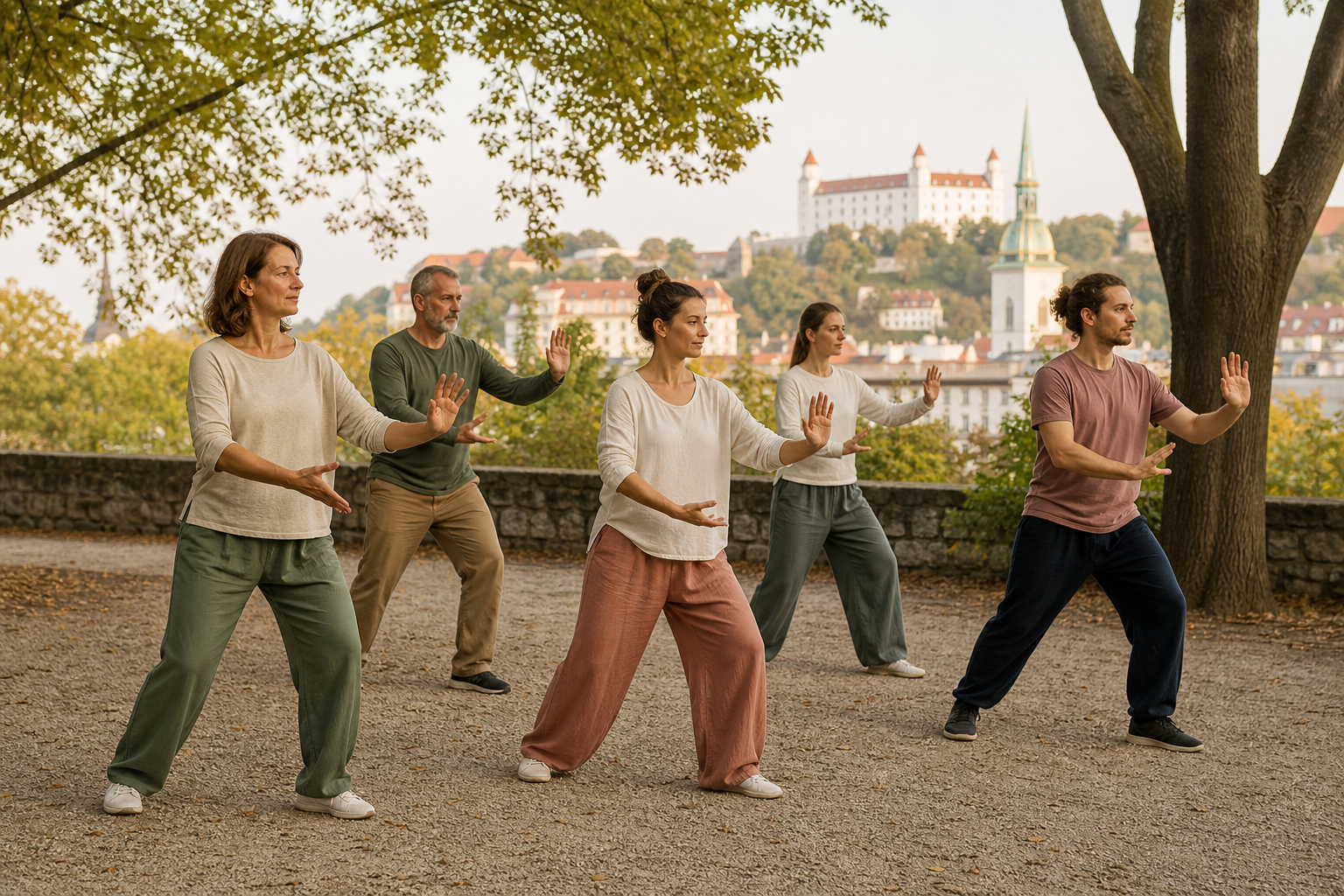
Tai Chi can be learned without belts or competition as a gradual movement practice. The instructor shows a short section, the group explores it at a calm pace, and feedback concerns support, direction, weight transfer and continuity. Progress does not mean defeating someone else; it means understanding the movement more clearly and being able to repeat it safely.
Specific feedback replaces a belt
In some martial arts, a belt is a visible marker of level. Tai Chi instruction does not require one to make the learning path clear. The content of the class provides orientation: stance, step direction, centre of weight, a calm completion and the connection to the next section.
Useful feedback is not a mysterious verdict on talent. It is concrete and actionable: make the step smaller, release unnecessary tension, slow the weight shift, or return to a simpler section.
A class grows through short demonstrations and repetition
A new movement can first be watched, then explored in parts and finally connected with familiar material. A beginner does not have to catch every detail at once. The instructor can show the same place from another direction or divide it into smaller steps.
Repetition is neither punishment nor an exam. In slow practice, it lets you compare your own first and next attempt without comparing yourself with a neighbour.
Progress is clearer movement, not a higher place
Over time, you may notice sooner where support is stable, when weight moves and where the movement is going. A form becomes less like a list of isolated shapes and more like a sequence of transitions.
Learning speed is not a shared ranking table. Previous experience, attention, fatigue and regularity differ. Useful progress remains safe, understandable and repeatable.
No competition does not mean no discipline
A calm group still needs regularity, consideration and a willingness to revisit basics. The goal is different: no score or elimination of an opponent, but cultivation of one's own movement.
Tai Chi has diverse lineages and may also appear in competitive or martial contexts. This page describes non-competitive learning for adult beginners in Bratislava, not every expression of the tradition.
A first visit needs no rank or special kit
Ordinary comfortable clothing that lets you stand and take a small step is enough. You do not need movement names, a memorised form or another school's etiquette.
Tell the instructor about movement limitations or unusual pain and do not force anything. Tai Chi is a movement practice, not a diagnosis or substitute for individual healthcare.
Common questions
Will I receive a belt or certificate in Tai Chi?
The beginner learning described here does not use belts. Specific feedback and gradual understanding of movement matter more.
How do I know I am improving?
Movement gradually becomes calmer and clearer: you recognise support, direction, weight transfer and the connection between short sections more readily.
Is the group suitable if I dislike competition?
Yes. Learning can happen without performance ranking; everyone works with the same principle within their own safe range.
Does this mean Tai Chi has no martial history?
No. Taijiquan has a broader historical and cultural context. This page explains a non-competitive way of teaching today's beginner.
Sources and context
- UNESCO — Taijiquan
Authoritative description of taijiquan as a cultural practice transmitted between generations; it does not prescribe belts or sporting rank.
- National Center for Complementary and Integrative Health — Tai Chi: What You Need To Know
Official overview of slow movement, attention, safety and evidence limits; not an evaluation of a particular school.