
The short answer
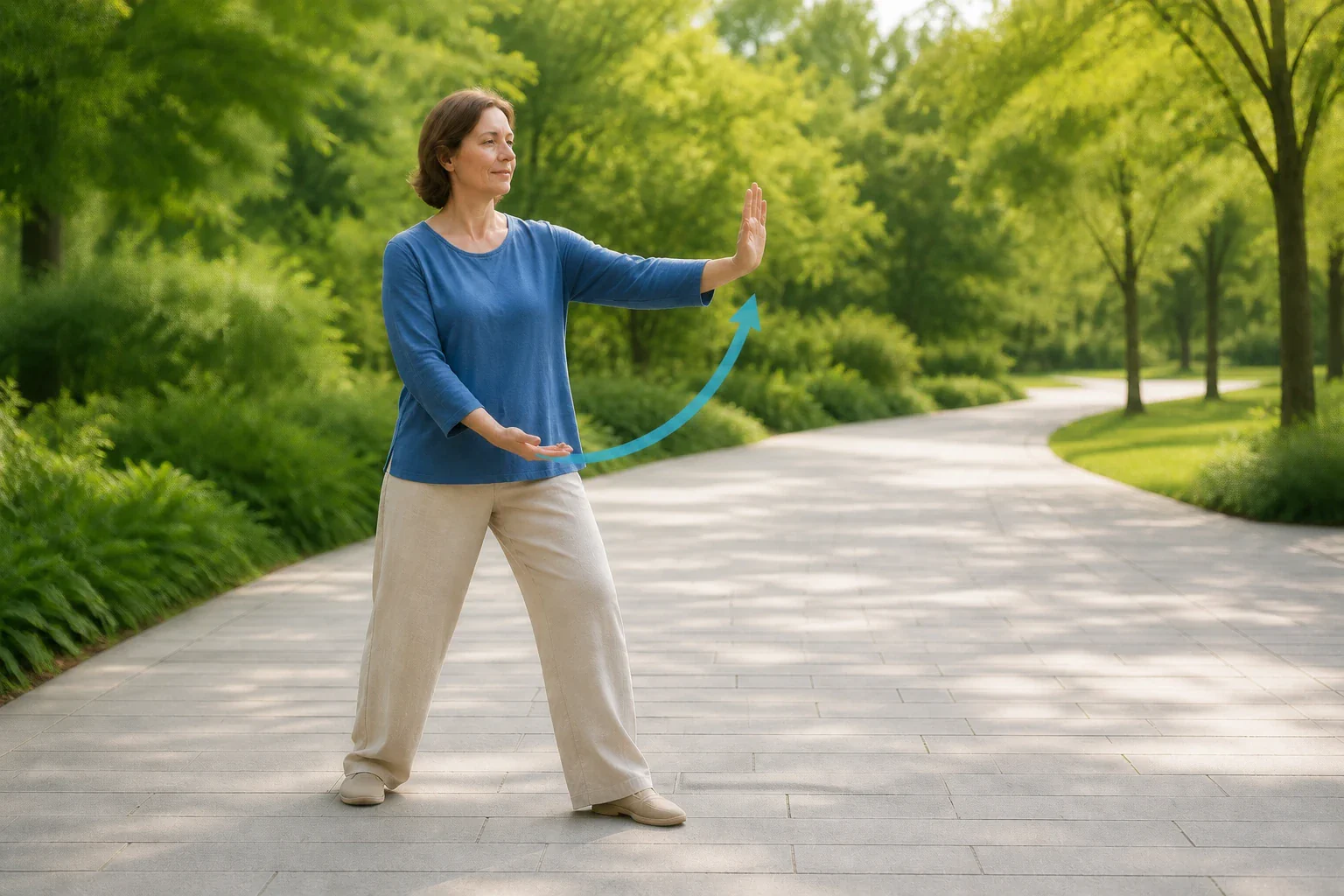
A ten-minute morning Tai Chi practice can follow a simple structure: settle into a comfortable stance, shift weight slowly, repeat one familiar movement and finish calmly. It is not a compressed form or a replacement for guided learning. For Tai Chi exercises at home, stable support, natural breathing and clear movement matter more than the number of techniques.
Why a short practice can be worthwhile
Ten minutes is not a magical or clinically established dose of Tai Chi. It is a manageable window in which you can revisit a few fundamentals attentively without rushing through a long form.
A short practice is particularly useful for maintaining contact with movement between guided sessions. You can notice support beneath the feet, release unnecessary tension and repeat something you already understand. It is not a reliable way to teach yourself unfamiliar technical details from text or pictures.
The World Health Organization emphasizes that every amount of movement counts. This does not mean that brief Tai Chi replaces other appropriate physical activity, muscle-strengthening movement, walking or individualized health advice.
Prepare a safe space first
Choose a level, firm and non-slip surface. Leave enough room for a small step forward, backward and sideways. Remove loose rugs, cables and objects that could move or cause a trip.
Wear ordinary loose clothing and stable footwear suitable for the surface. If you are uncertain about balance, remain within easy reach of a solid wall, rail or stable chair. Support should be available without requiring a sudden step.
- Surface: Level, firm and free from objects that may shift
- Space: Enough room for a small step and unimpeded arm movement
- Support: A firm wall or stable chair within comfortable reach if needed
- Range: A higher stance and shorter step are preferable to moving at the edge of stability
A simple ten-minute structure
The following is not an independent Tai Chi form. It is a framework for revisiting fundamentals that have already been explained to you. If you do not know a particular movement or are unsure of its direction, remain with a comfortable stance and a small weight shift.
- The first two minutes: Stand comfortably, feel the contact beneath your feet and allow the shoulders to settle without forcing the spine straight
- The next two minutes: Transfer weight slowly between the legs without lifting the feet or swinging the trunk abruptly
- Three minutes of a familiar movement: Repeat one simple element you remember confidently from guided practice
- Two minutes of connection: Connect weight shifting to a small step or arm movement only while support remains clear
- The final minute: Reduce the range, come to a calm stop and notice breathing, tension and stability
How to recognize a good repetition
Slowness alone does not make movement skilful. A good repetition remains controlled, understandable and adjustable. You should be able to reduce, slow or stop it without a sudden recovery step.
You do not need to match every gesture to a mechanical breathing pattern. At the beginning, it is more useful to breathe naturally and avoid holding the breath while concentrating. The shoulders do not need to be forced down and the knees do not need to bend deeply.
- Clear support: You know which leg carries more weight and the other foot can move without rushing
- Natural breathing: Breathing remains free and does not have to follow a complicated rhythm
- Soft joints: Knees and elbows are neither rigidly locked nor pushed into an extreme position
- A calm stop: You can finish without a sudden step, grab or loss of direction
What not to practise alone at home
Text and video cannot see your posture from different angles or immediately flag uncomfortable loading. Do not expand the form with elements you have not learned, and do not imitate very low stances or large steps merely because they look advanced.
Do not close your eyes to make weight shifting harder and do not practise on an unstable surface. Stop if you experience sharp pain, dizziness, faintness, chest pain or sudden weakness. Seek qualified healthcare advice for new or persistent symptoms.
- No guessing unfamiliar movements: Repeat what you understand instead of inventing the next part of a form
- No sinking at any cost: Stance depth is not a measure of success and deep bending is not compulsory
- No pushing through pain: Sharp or increasing pain is not a normal requirement of learning Tai Chi
- No medical records through chat: Describe a practical movement limitation to the teacher; do not send medical documentation
How to turn short practice into a habit
Consistency is easier to build around a specific cue than a vague intention. You might practise after washing, before your first coffee or after opening a window. Morning is not compulsory; choose a time when the space is safe and you do not need to rush.
Repeat the same simple structure for several days. Constantly adding new videos may create variety without improving understanding. Write down one specific question to clarify during your next guided session.
If ten minutes feels excessive on a particular day, reduce the range or duration. If practice feels pleasant, do not automatically extend it by sharply increasing repetitions. First notice whether movement remains equally clear near the end.
Home and guided Tai Chi complement each other
A brief home session helps you remain familiar with known movement. Guided practice provides feedback, explains direction and introduces appropriate next steps. One does not need to replace the other.
Tai Chi Bratislava is for adult beginners interested in calm movement, balance and meditation in motion without contact or combat training. Current practical conditions are provided in writing in a personal reply. A WhatsApp message is a non-binding enquiry and does not create a reservation or payment obligation.
Frequently asked questions
Is ten minutes of Tai Chi a complete form?
No. This structure is a brief review of stance, weight shifting and one familiar movement. A complete form and its technical relationships are learned progressively.
Can I learn Tai Chi only at home from articles and videos?
Articles and videos can provide orientation, but they cannot offer immediate feedback on stance, direction and balance. At home, it is safest to repeat simple movements you already know from guided learning.
Do I have to practise every morning?
No. Morning is a convenient option, not a requirement. Choose a time when you have a calm, safe space and can move without rushing.
What if weight shifting feels unsteady?
Reduce the transfer, use a higher stance and keep firm support within reach. Unexplained or worsening instability, dizziness or repeated falls should be assessed by a qualified healthcare professional.
What is the best Tai Chi exercise to do at home?
For a beginner, the best choice is a simple movement you understand and remember safely. A calm weight shift is often more useful than independently attempting a complicated sequence.
Sources
- National Center for Complementary and Integrative Health — Tai Chi: What You Need To Know
Official overview of Tai Chi, its safety and the importance of not postponing healthcare
- UNESCO — Taijiquan
Authoritative description of relaxed circular movement, breath regulation and focused attention in the taijiquan tradition
- World Health Organization — Physical activity
Official overview of activity guidance and the principle that every amount of physical activity is better than none